Different era, different narrator, but Prehistoric Planet remains a breathtaking documentary about extinct animals and the world they lived in. A few years ago, I wrote a review about the first season of Prehistoric Planet, which was a worthy successor to the acclaimed BBC documentary Walking with Dinosaurs from 1999. I also expressed my hope for follow-up seasons that would showcase other eras. With the third season, subtitled Ice Age, that wish comes true. And with it, Walking with Beasts from 2001 also gets a worthy successor.
Not David Attenborough, but Tom Hiddleston takes us to a prehistoric world. We find ourselves in the Pleistocene, an era that began two and a half million years ago and ended about twelve thousand years ago. This era consisted of alternating ice ages and warmer periods. It was no longer the reptiles, but the mammals that ruled the earth (and in a few places, birds too). But the world was more than just ice caps with thick-haired animals. And Prehistoric Planet: Ice Age shows this very well.
Prehistoric Planet also puts lesser-known Ice Age animals in the spotlight
The familiar image people have of the ice age certainly appears. We see icy plains filled with mammoths, woolly rhinos, and saber-toothed cats. But life on earth during this period is more diverse than that. Around the equator and in the southern hemisphere, it is warmer, and deserts, grasslands, and dry forests provide a home to three-meter-tall flightless birds, tree-dwelling marsupial lions, and ground-dwelling sloths. Just like in the previous seasons, the creators succeed in putting animals from that time that are less known to the general public in the spotlight.
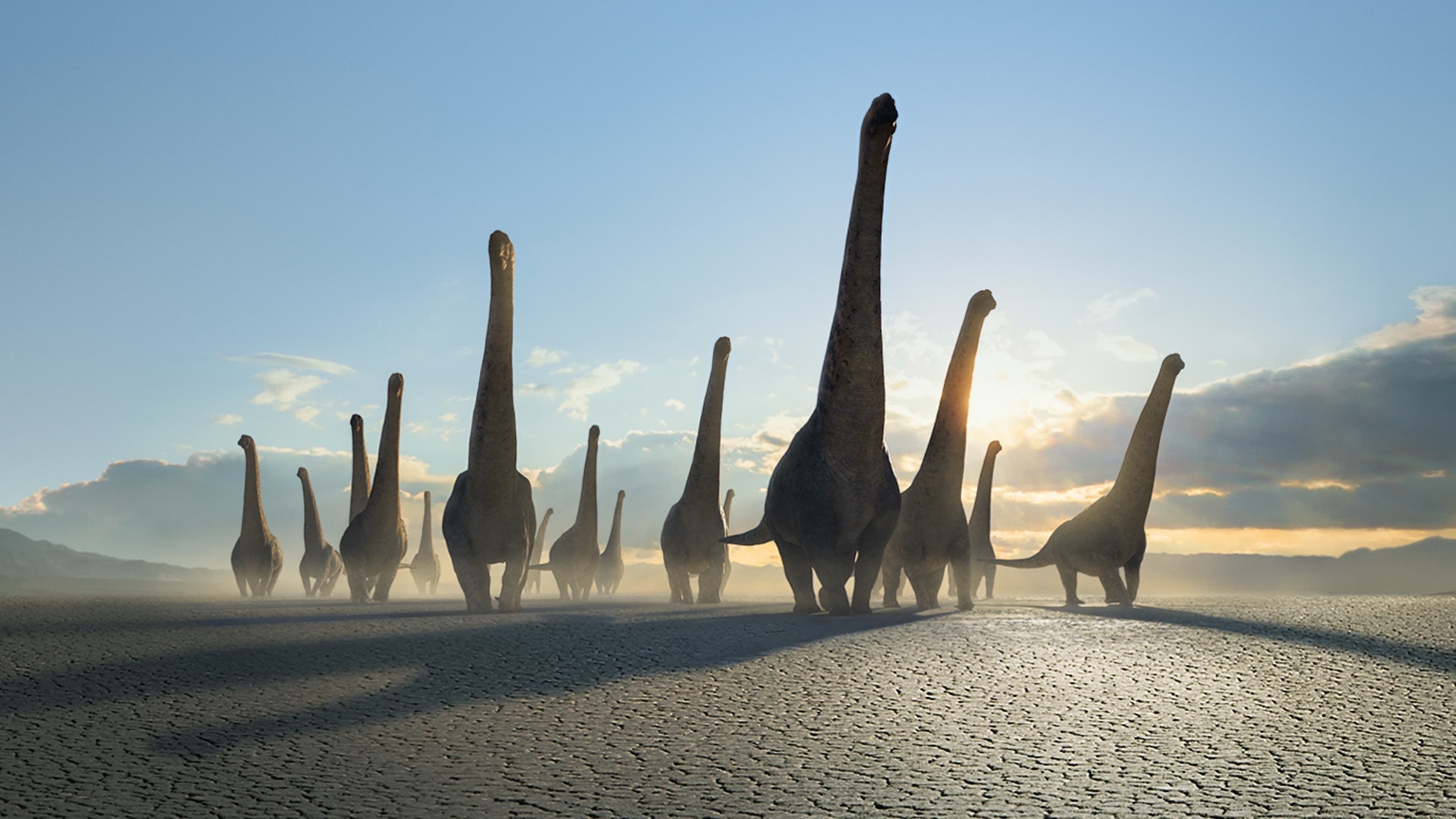
Just like in the previous seasons, Prehistoric Planet looks magnificent, and the animals are brought to life in a realistic way. I can imagine it being a greater challenge to portray furry mammals well with digital effects than scaly reptiles. Yet the creators succeed in this. The music, partly composed by Hans Zimmer, is enjoyable once again.
This season, we can once again enjoy breathtaking visuals.
The combination of image and sound creates a convincing and realistic atmosphere. In the first scene, about a mammoth in a snowstorm, you feel cold, and the snowflakes almost come out of your screen. You get thirsty when a gigantic armadillo treks through the desert in search of water. It's a pity that David Attenborough is no longer the narrator, but Tom Hiddleston does a very good job.
In the first season, I missed a bit of scientific accountability. How did scientists come to certain conclusions? Why do we think certain animals looked a certain way? I was pleased that this was included in the second season, and in Ice Age, this accountability is also present.
At the end of each episode, there is a segment titled Under the Ice, where scientists explain why the earth looked the way it did in the past and how we can know this now. In these segments, scientists use sleek animations to tell their story in understandable language, making Under the Ice a very good addition to the whole.
A small thing that slightly bothered me, and this may be partly because I have a background in biology, was the use of species and genus names. In many cases, the animals are referred to by a common English name and not the scientific one. Animals are reduced to giant kangaroo, ice age sloth, or saber-toothed cat instead of Procoptodon, Eremotherium, or Smilodon. Now I understand that they did this to keep it accessible for a larger audience and that the animals during this season resemble modern animals more than dinosaurs, but in my view, it slightly detracts from the scientific character of this documentary.
Walking with Beasts now also has a successor. The third season of Prehistoric Planet is a beautiful and captivating nature documentary about a world that is very much like ours but at the same time looks entirely different. I really hope that Apple TV+ comes out with another season set in the ice age or another era because I definitely want to see more of this!
About the writer, Karzal
Mike (1995) has been a member of MySeries since 2016 and is mainly active on the English version of the site. Since 2018, he has been actively translating news articles, columns, reviews and basically everything that ends up on the Dutch site. The original articles, columns and reviews were actually written by others. During the week Mike can be found at IKEA, where he is a national systems specialist and occasionally also in the classroom to teach an English lesson. In addition, Mike logically enjoys watching series and has actually been spoon-fed this from an early age. The genre doesn't matter, there is a place for everything in the otherwise busy life.
All in all, it was fine to watch, but I did have some comments about this season, see the reactions to the series. The music is fine. The CGI is only passable and a bit disappointing. And the stories are quite unbelievable in places. I assume you, as a biologist, are familiar with the term anthropomorphism. They really take it to extremes here.
I can't quite give this season a 9. That's partly personal taste, but I seriously doubt the scientific basis for several events. And finally, I thought the Disneyfication went a bit too far. (Almost) everything has to have a happy ending. Especially when a young animal is involved.
Yes, it's true that things almost always end well, and I see the humanization. I understand why that was chosen, and I can imagine it wasn't everyone's cup of tea, but personally, it didn't bother me.
In terms of scientific substantiation, this is always a lot of guesswork. But because the animals in this season are much more similar to related species today, much more can be deduced based on the behavior of contemporary animals. For example, the moa's behavior is directly based on the behavior of emus, cassowaries, and kiwis, ratites that now live in the area where the moa once occurred (females are larger than males, and males care for the young). It remains guesswork, as were the following two seasons, but it's logical that they made this choice here.
It certainly wasn't my cup of tea. Especially when you're making a documentary about predators, it deserves a bit more intensity. It's logical and well-known that they target the weakest of the group. And it's also common knowledge that this is often a sick, old, or young specimen. Life is harsh in nature, and they could have shown that more.
Thanks for your explanation about the MOAs. Yes, that makes sense, and you could indeed extrapolate behavior that way. It's still guesswork, of course, but at least it has some basis. I hadn't considered that!





The music is fine. The CGI is only passable and a bit disappointing. And the stories are quite unbelievable in places. I assume you, as a biologist, are familiar with the term anthropomorphism. They really take it to extremes here.
I can't quite give this season a 9. That's partly personal taste, but I seriously doubt the scientific basis for several events. And finally, I thought the Disneyfication went a bit too far. (Almost) everything has to have a happy ending. Especially when a young animal is involved.
In terms of scientific substantiation, this is always a lot of guesswork. But because the animals in this season are much more similar to related species today, much more can be deduced based on the behavior of contemporary animals. For example, the moa's behavior is directly based on the behavior of emus, cassowaries, and kiwis, ratites that now live in the area where the moa once occurred (females are larger than males, and males care for the young). It remains guesswork, as were the following two seasons, but it's logical that they made this choice here.
Thanks for your explanation about the MOAs. Yes, that makes sense, and you could indeed extrapolate behavior that way. It's still guesswork, of course, but at least it has some basis. I hadn't considered that!